Taking a study to Brazil, Mexico and Colombia looks like a translation job. It is not.
A discussion guide translated word for word works on paper. In the conversation, it sounds off, mentions things that do not exist in the country and asks questions people have to guess how to answer.
The result is a study that compares countries using different questions, even when the text looks the same.
Translation is not adaptation
Translating swaps the words. Adapting makes sure the question means the same thing to the person on the other side.
In practice, that means reviewing four things: the form of address, everyday references, words that change from country to country and the profile of who takes part.
Pick a form of address and stick with it
Spanish has more than one way to address someone, and the norm varies.
In Mexico, “tú” is common in digital products and informal conversations. In Colombia, “usted” shows up even in close conversations in many regions.
Pick one form of address per country and keep it from the beginning to the end of the guide. Mixing the two in the same conversation sounds careless and breaks trust.
Swap in local references
Questions that mention everyday life in your home market need real equivalents in each country. Some examples from financial services:
| Brazil | Mexico | Colombia |
|---|---|---|
| Pix, the instant transfer system | SPEI transfer | Apps like Nequi and Daviplata |
| “Parcelado sem juros”, interest-free installments | “Meses sin intereses” | Buying “a cuotas” |
| Boleto, a bank payment slip | Cash payment at OXXO | Cash payment at points like Efecty |
| CPF, the personal ID number | CURP | Cédula de ciudadanía |
The same goes for retail, transportation and health: the stores, apps and services people actually use are different in each country.
Watch out for words that change
Some common words change from one country to another. A computer is “computadora” in Mexico and “computador” in Colombia. In Mexico, “camión” also means bus.
These are small differences, but one word out of place makes the person stop to figure out the question, and that shows up in the answer.
The best review is simple: ask a native speaker from each country to read the guide out loud. Whatever sounds off comes up on the first read.
Set quotas and profiles by country
The same profile does not mean the same reality. Income, region, main bank and shopping habits change from country to country.
Set quotas separately for each market and check that the screening criteria make sense locally. “Digital bank customer” describes audiences of very different sizes in Brazil, Mexico and Colombia.
One guide, three languages, one report
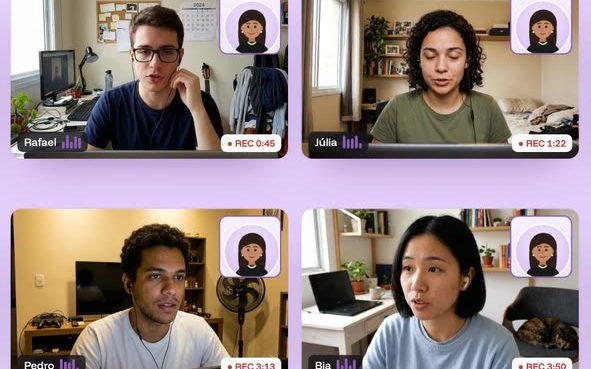
With userx, the same study runs in Portuguese, Spanish and English, with real people from each country and quotas by group. Each person answers in their own language, and the AI Moderator runs the conversation in that language.
The report comes out in Portuguese, with every quote in its original language. That way, the team compares the countries side by side without losing how each person said things.
Checklist before fieldwork
- Is the form of address set and consistent across the whole guide?
- Does every reference from your home market have a real equivalent in each country?
- Has a native speaker from each country read the guide out loud?
- Were quotas and screening criteria set by country?
- Does the team know which language it will read the results in?
Adapting takes more work than translating. But it is what makes sure that, in the end, the team is comparing answers to the same question.